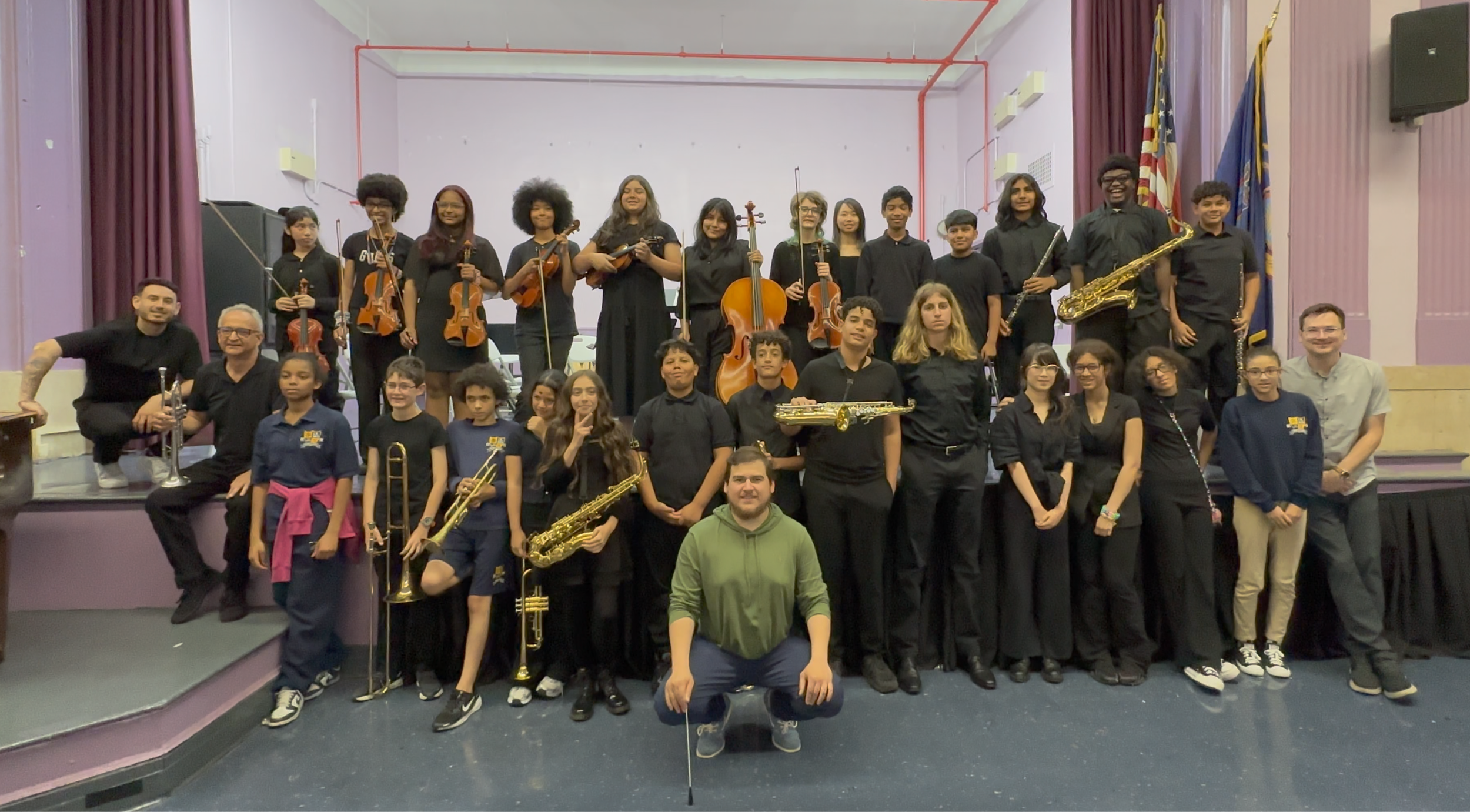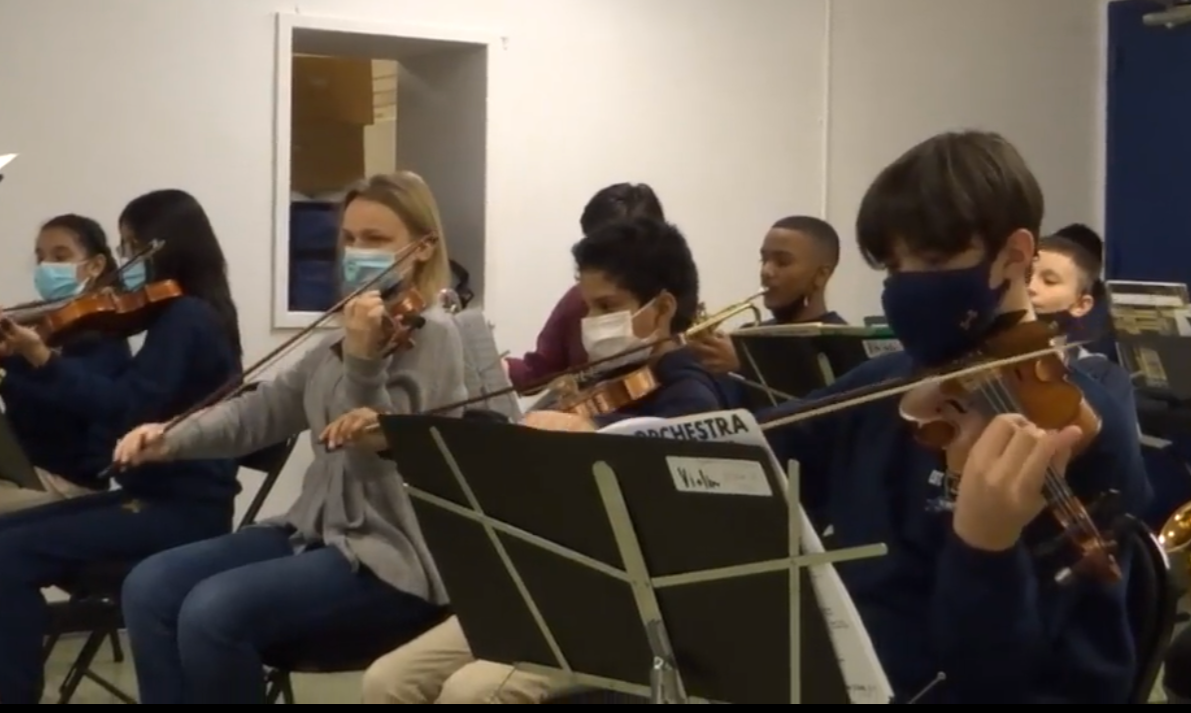
Student Voices and History
-
We're a team of passionate thinkers and doers, dedicated to building with purpose and clarity. Collaboration and curiosity drive everything we do.
-
We believe in keeping things simple, smart, and human. Every project starts with listening and ends with something we're proud to share.
-
From startups to seasoned brands, we partner with people who care about doing things right—and doing them well.
The Symphonic Youth Experience
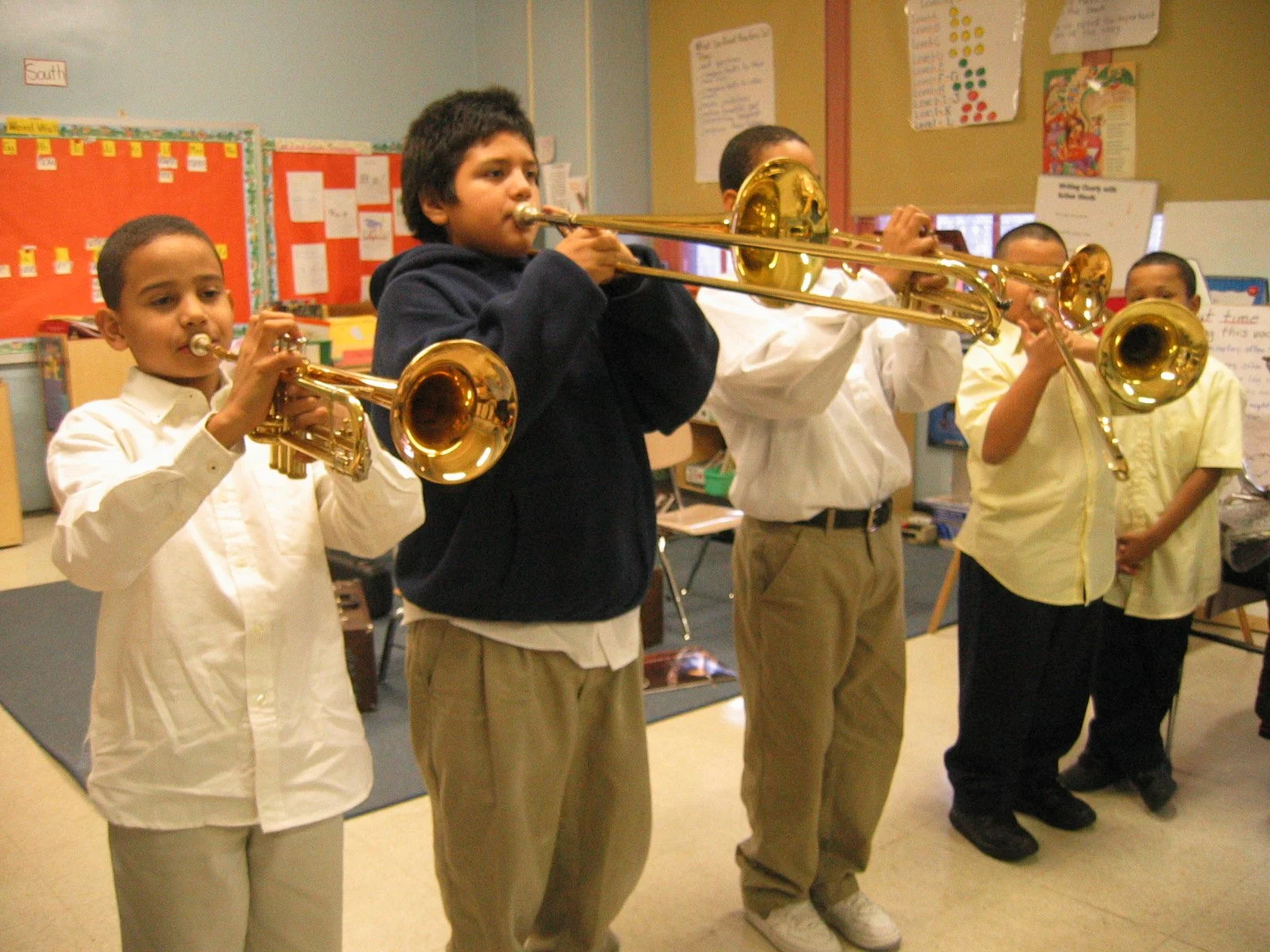
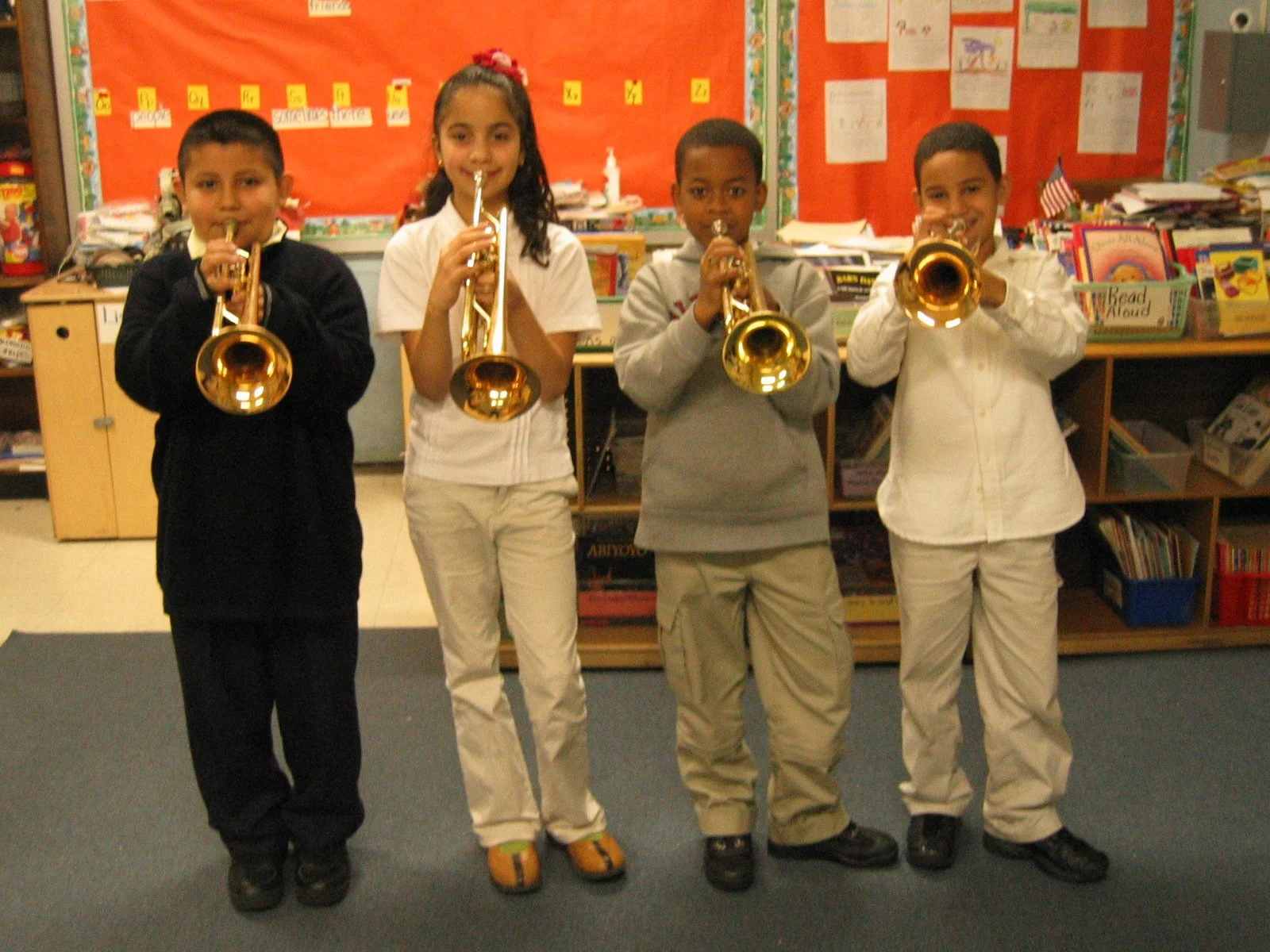
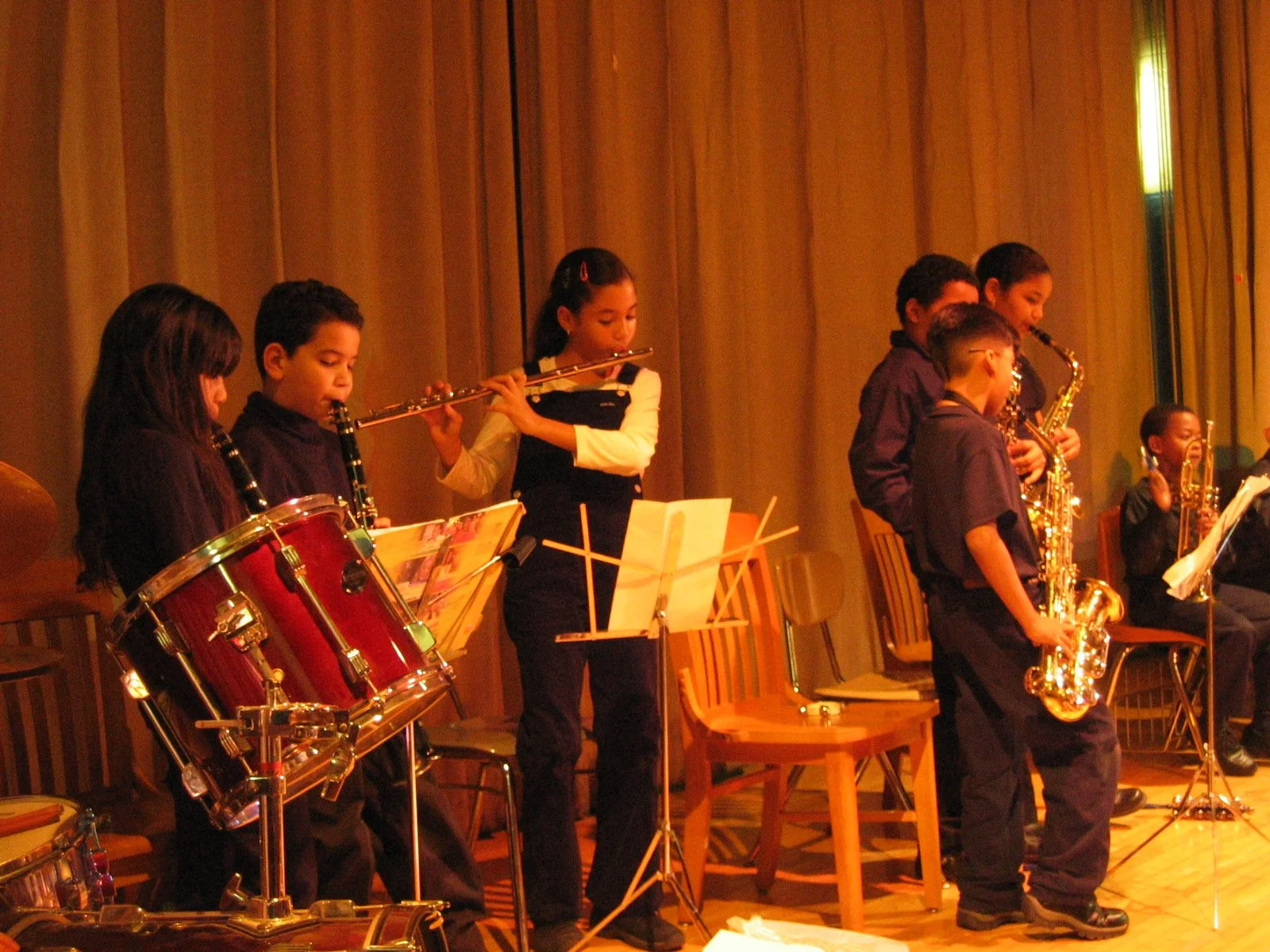
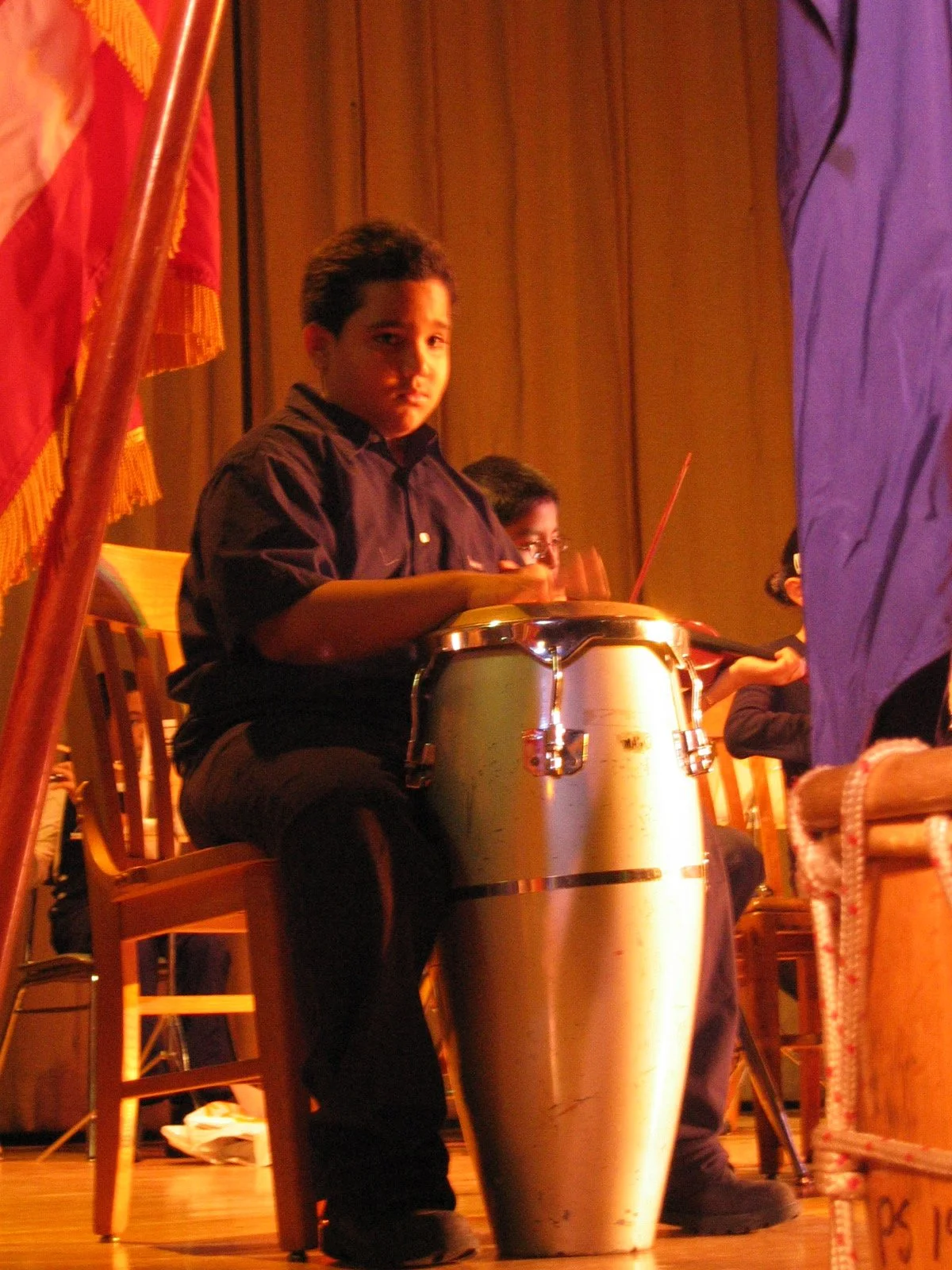

Legacy
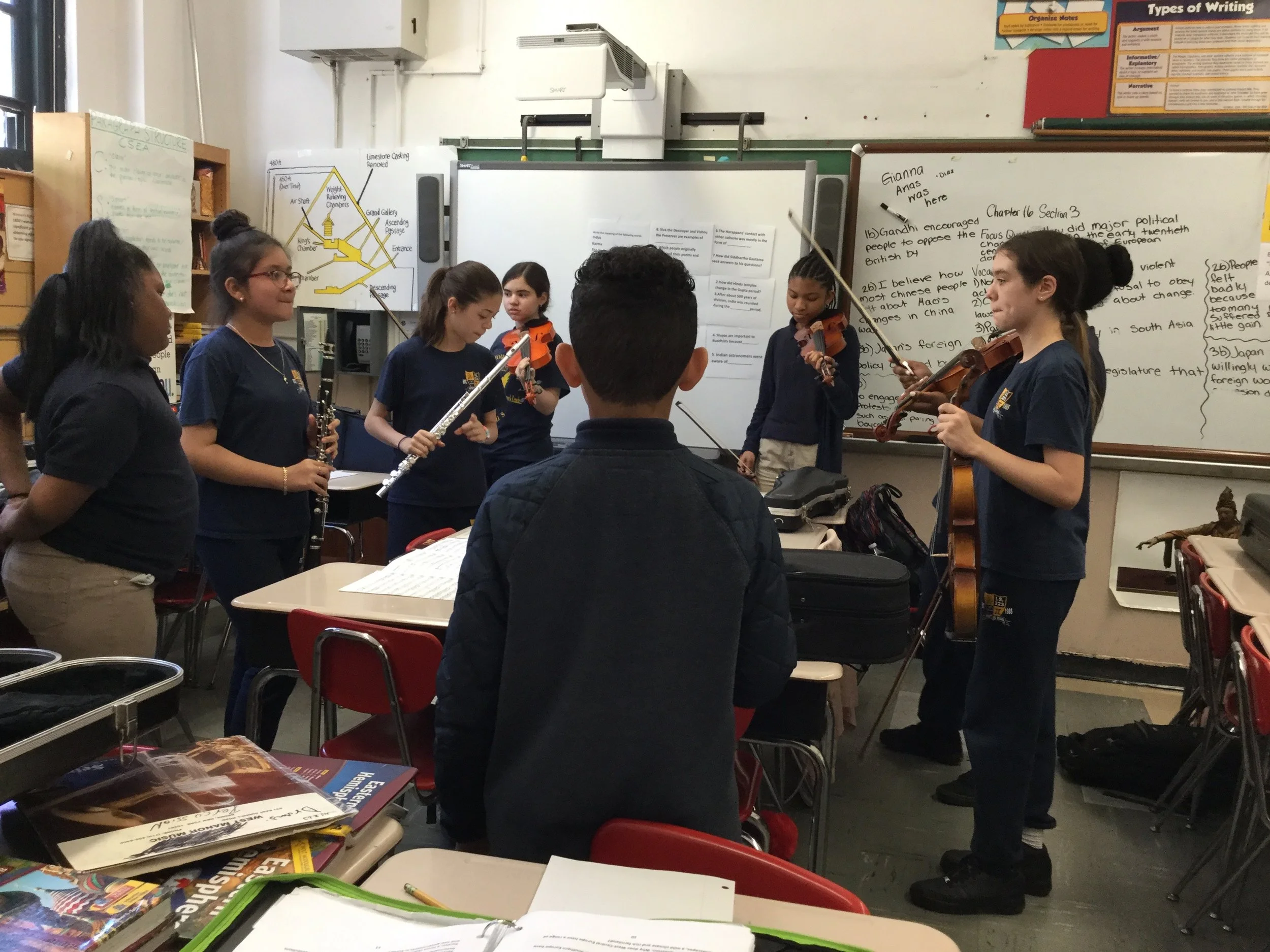
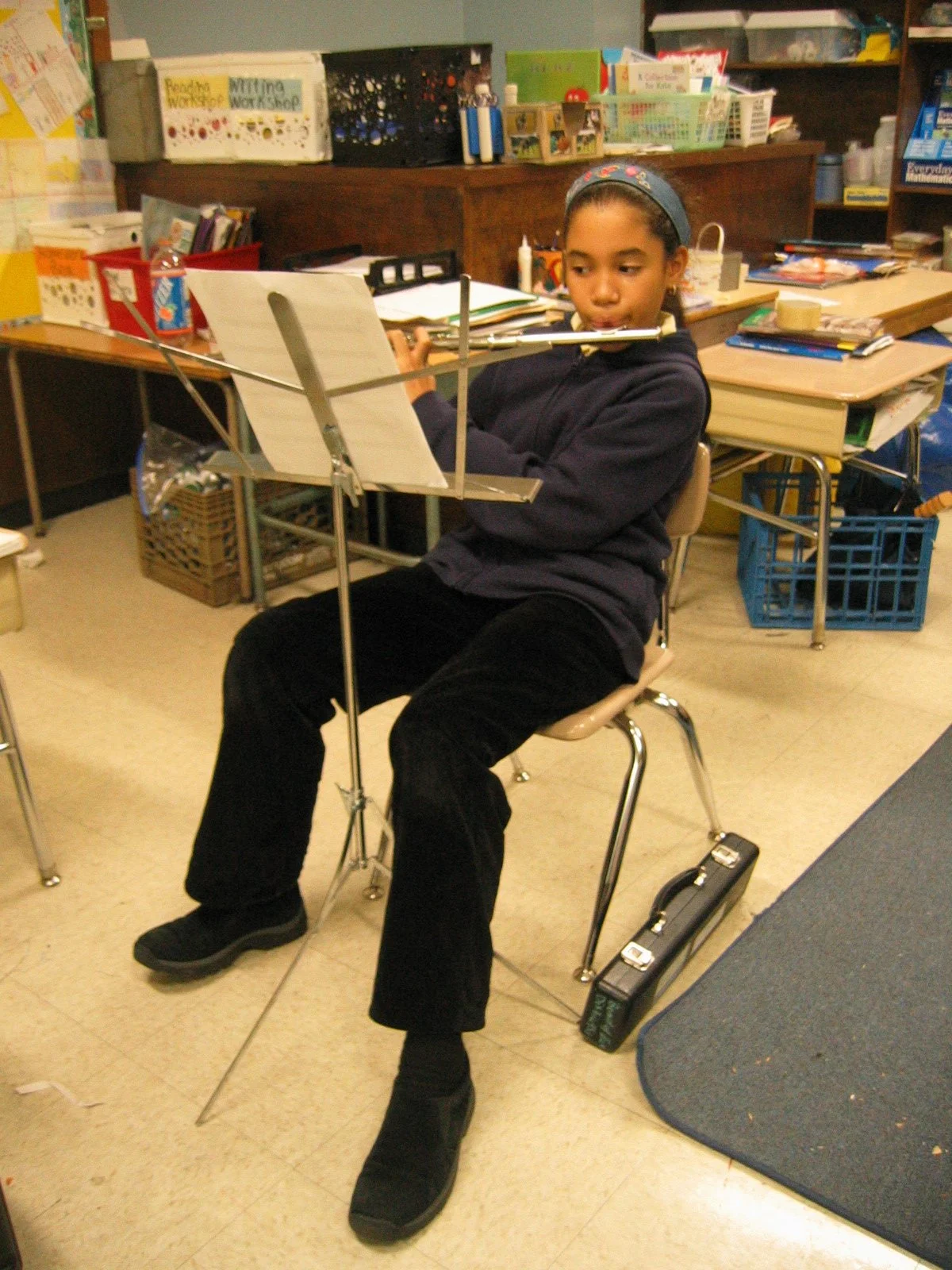
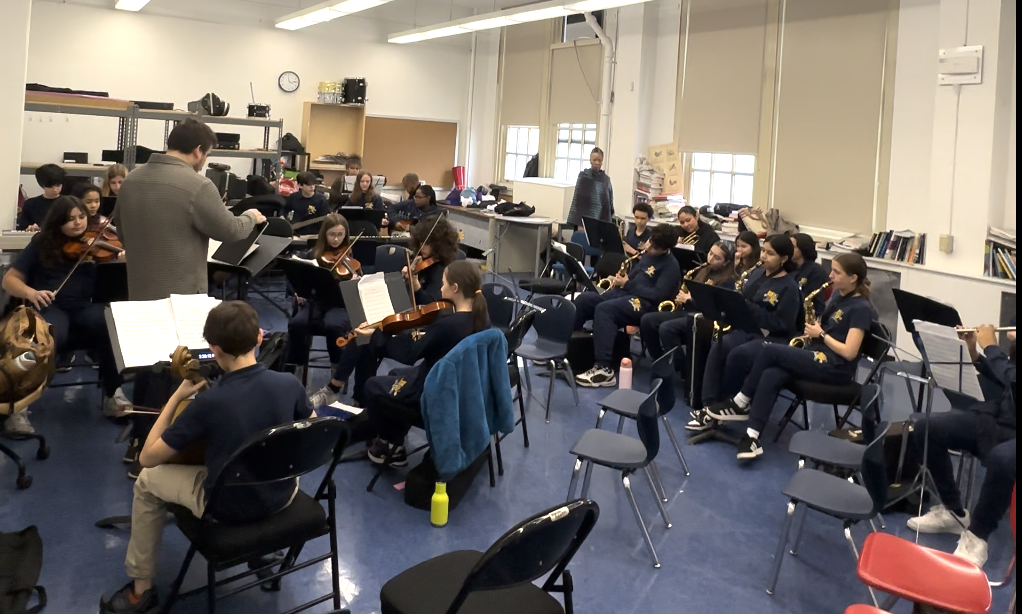
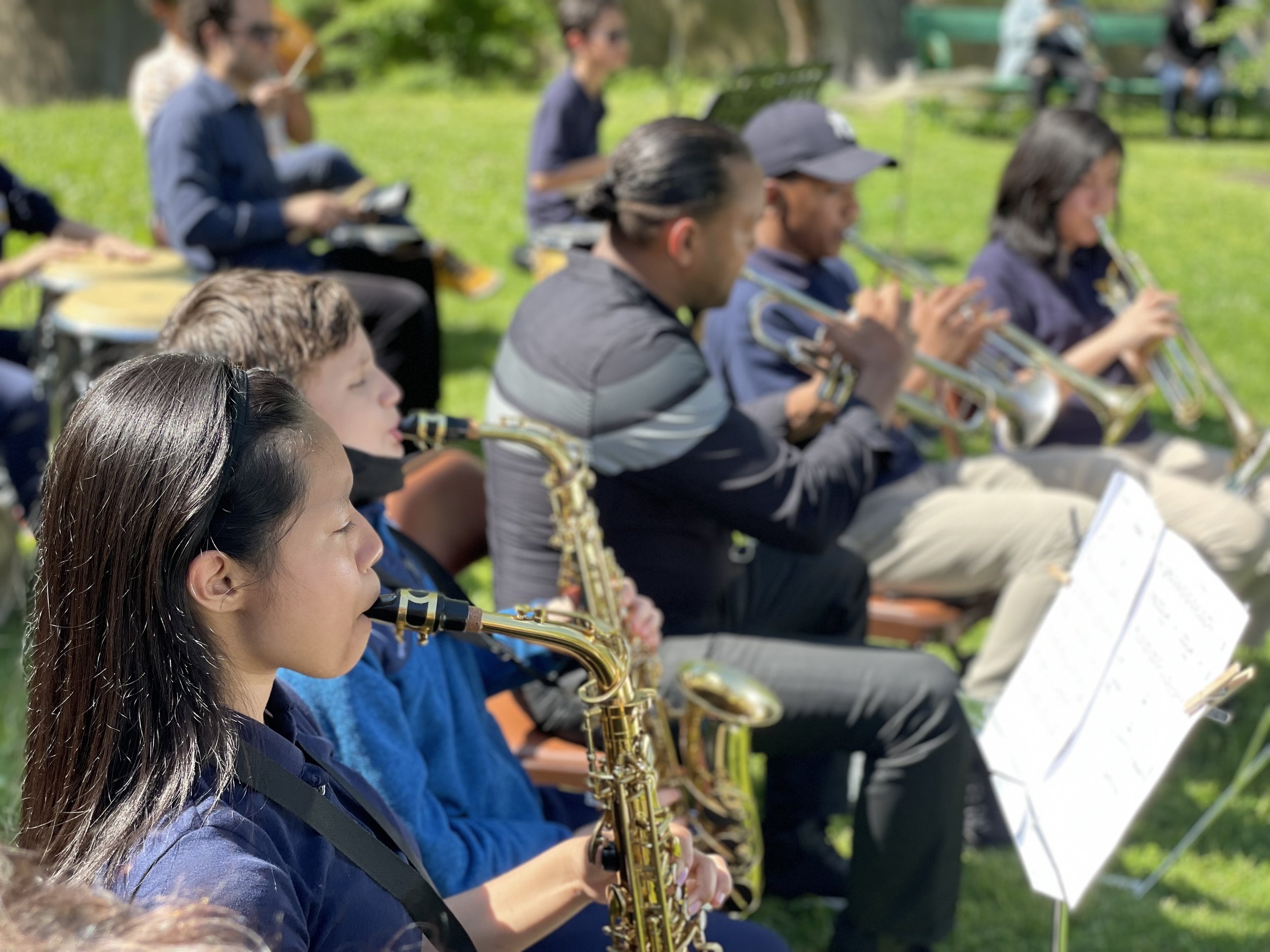
27-year partnership with Mott Hall School, fostering community and musical excellence.
Curriculum
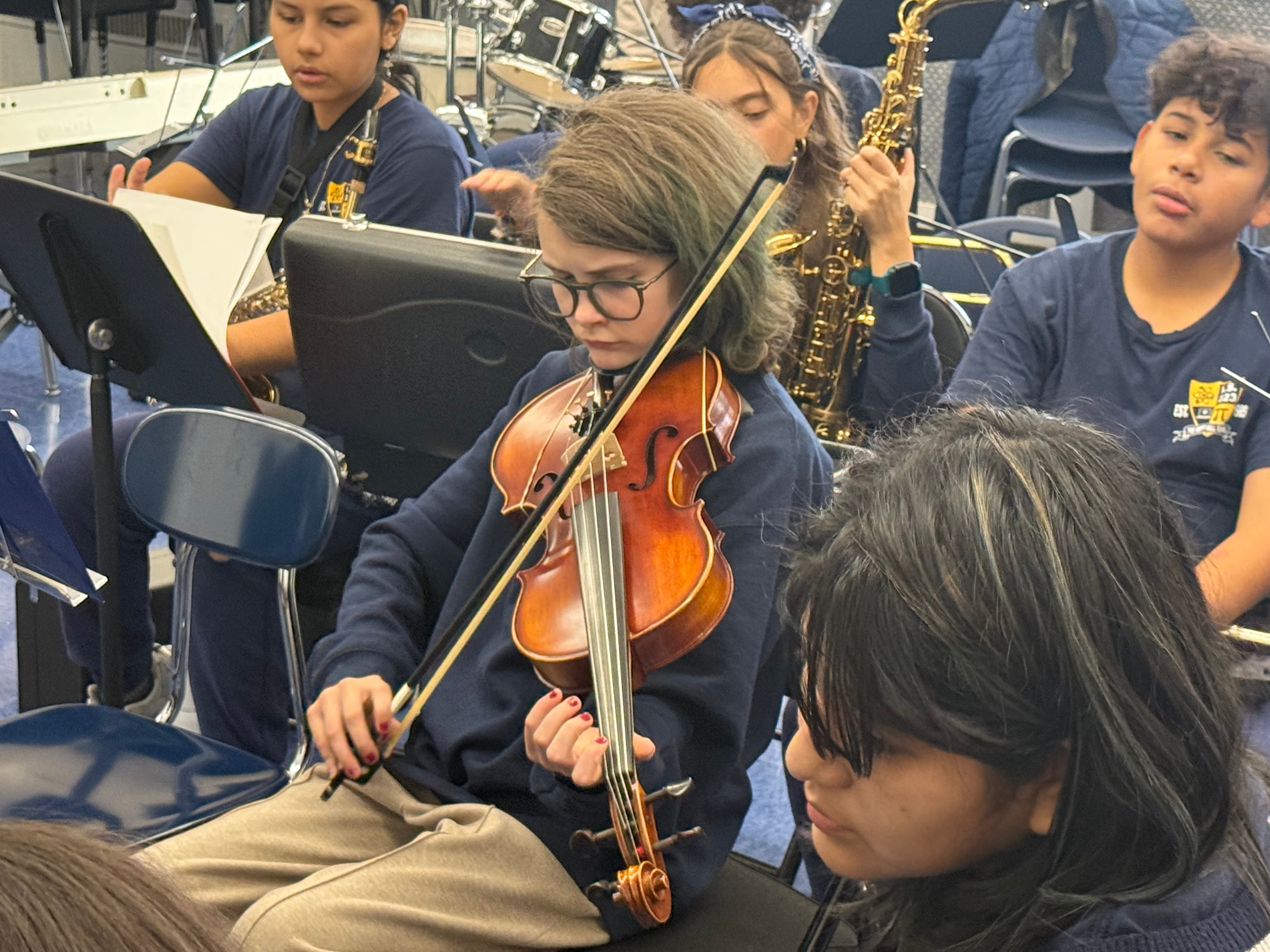
Curriculum that teaches the histories and stories of immigration and cultural diaspora.
-
Arirang has no known composer because it is a traditional Korean folk song, meaning it has been passed down through song and memorization, generation after generation for hundreds of years. It is considered the unofficial anthem of all of Korea because it predates the division of North and South Korea before Japanese colonization and World War 2. Arirang represents the long history of traditional Korean peoples, and the ability to overcome hardship and struggles.
-
Cielito Lindo is a Mexican copla (Spanish song) popularized in 1882 by Mexican author Quirino Mendoza y Cortés. The song has become a cornerstone of Mexican mariachi music, famously recognized by the lyrics "Ay, ay, ay, ay, canta y no llores" (Sing and don't cry). Cielito Lindo means, “Pretty Little Sky,” and the song represents hope, joy, and comfort for a better tomorrow.
-
The Lion Sleeps Tonight was originally recorded by Solomon Linda and the Evening Birds in South Africa in 1939, and titled “Mbube,” which means “the lion” in Zulu language. A copy of the original “Mbube” record made its way to New York City in the early 1950s, where it was discovered by American folk musicians who, unable to understand the lyrics of “Mbube,” renamed the song “Wimoweh” and wrote new lyrics. The Lion Sleeps Tonight became one of the most successful American pop songs of all time, however, Solomon Linda did not receive fair credit or compensation for his writing of the song until 2006 after his death. ReMastered: The Lion's Share Documentary
-
C Jam Blues was composed by Duke Ellington in 1941. It is a 12-bar blues that uses only two notes in its main melody, which is why it is a “Jazz Standard" for learning to improvise. Duke Ellington was an African American jazz musician during the time of Jim Crow laws in the United States, when racial segregation and discrimination was still legal. His fame and popularity helped fight racism and advance civil rights.
-
Tanga is considered to be the first Afro-Cuban jazz tune in the United States, composed in 1943 by Mario Bauza and performed by his band, the Machito Orchestra. Mario Bauza invented Latin Jazz by combining Afro-Cuban rhythms (percussion) with elements of traditional American jazz (harmonies and improvisation). An intersection in East Harlem is named "Machito Square" in his honor because of his contributions to Latin music in the United States.
-
Killer Joe was composed by Benny Golson in 1959. Benny Golson is an African American tenor saxophonist, known for pioneering the bebop or hardbop style of jazz. The song's name, “Killer Joe,” was derived from colorful, sharp-dressed characters in jazz clubs. Like C Jam Blues, Killer Joe is considered a “Jazz Standard” because it only uses 2 chords making it a laid back groove, and easy to improvise over. The song become popular for its gorilla marketting - posters across NYC, “Has anyone seen, Killer Joe?”
-
Oye Como Va was composed in 1962 by Tito Puente, “The King of the Timbales,” born to Puerto Rican parents in Spanish Harlem. He composed dance-oriented mambo and Latin jazz music. The original "Oye Cómo Va" is a cha-cha-chá song, but it achieved worldwide popularity when it was covered by American rock group Santana in the 1970’s. "Oye Cómo Va" is another example of Latin rhythms and American genres combined.
-
Libertango was written by Astor Piazzolla in 1974. Piazzolla was from Argentina and became famous for inventing Nuevo Tango, which was a new genre that blended traditional tango with jazz, classical music, and dramatic elements. The title mixes "libertad" (freedom) with "tango."

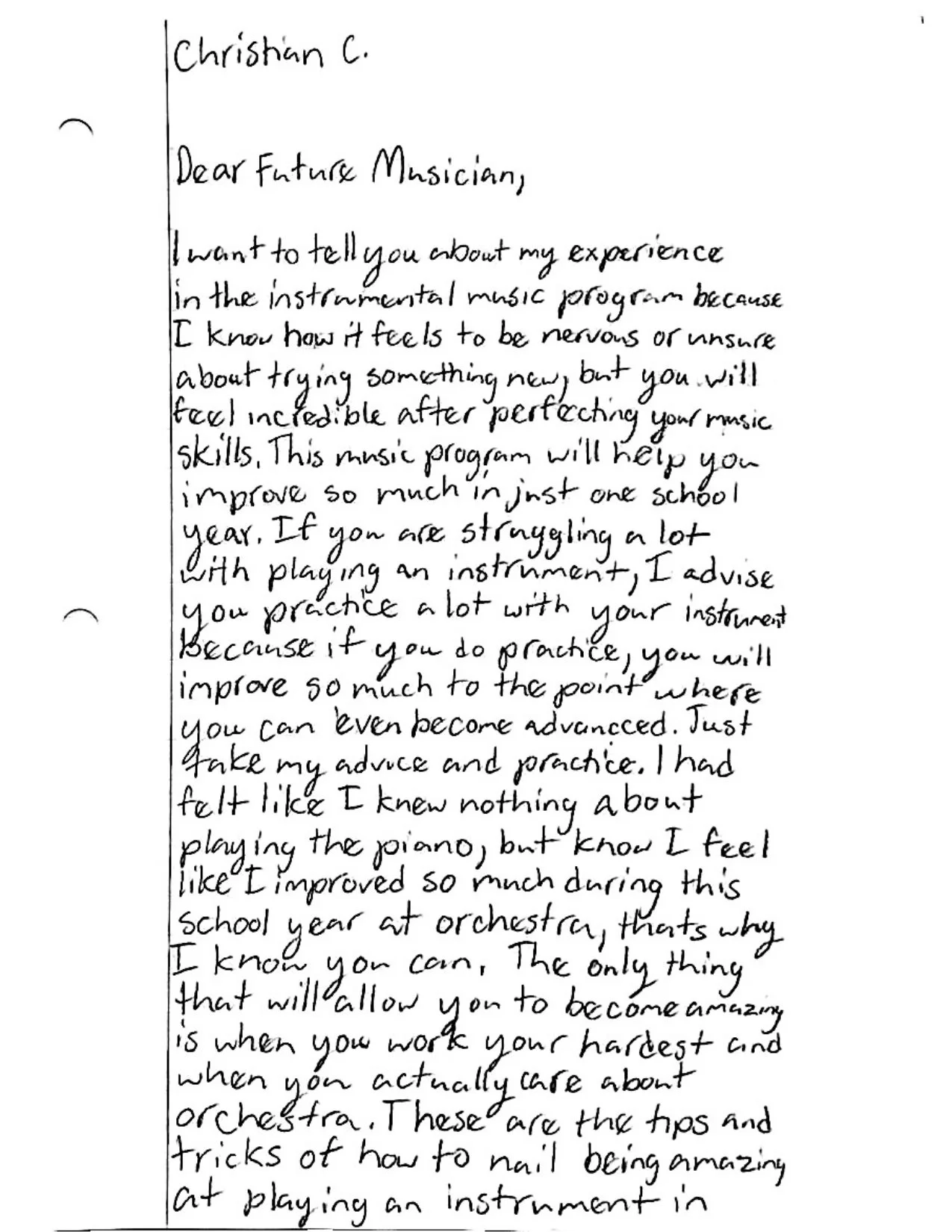
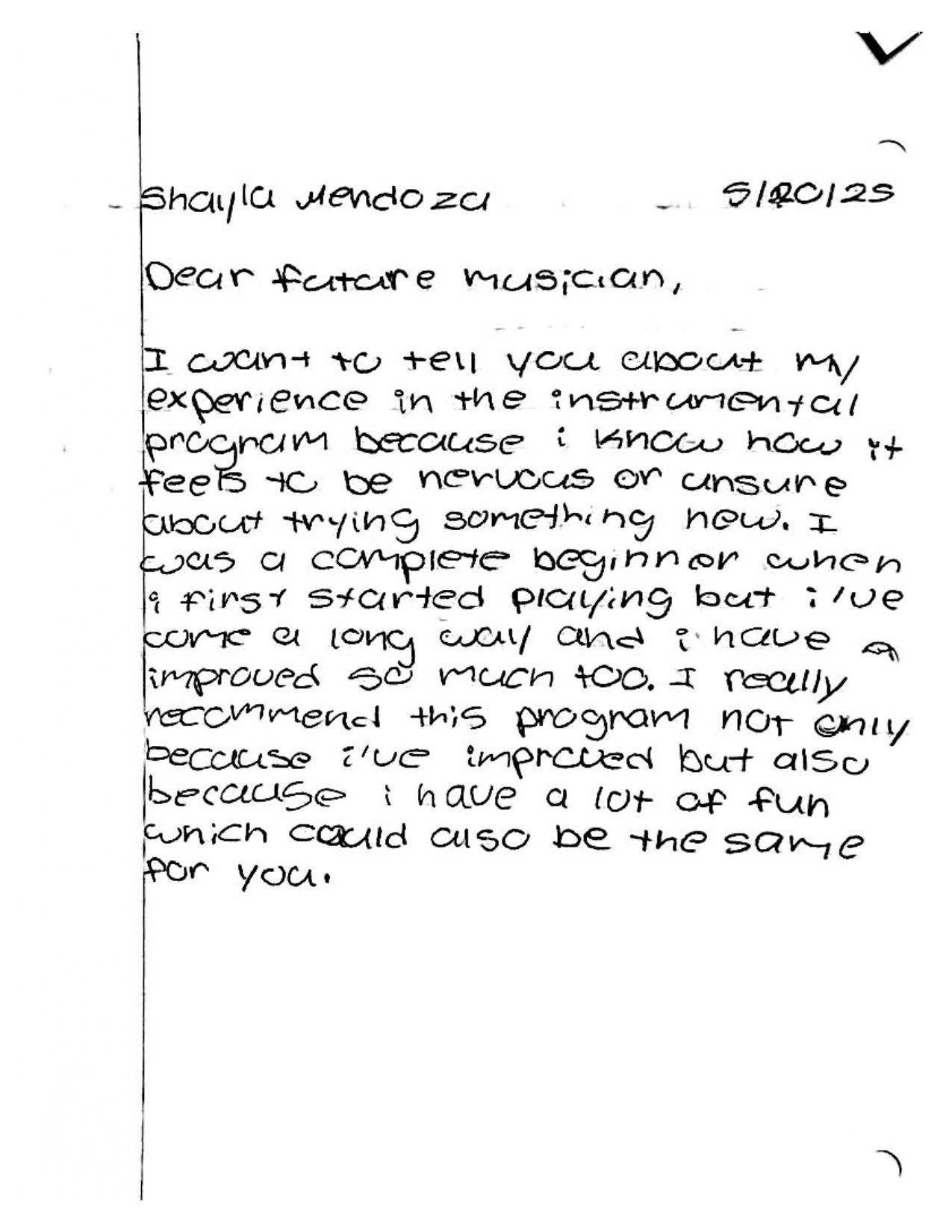
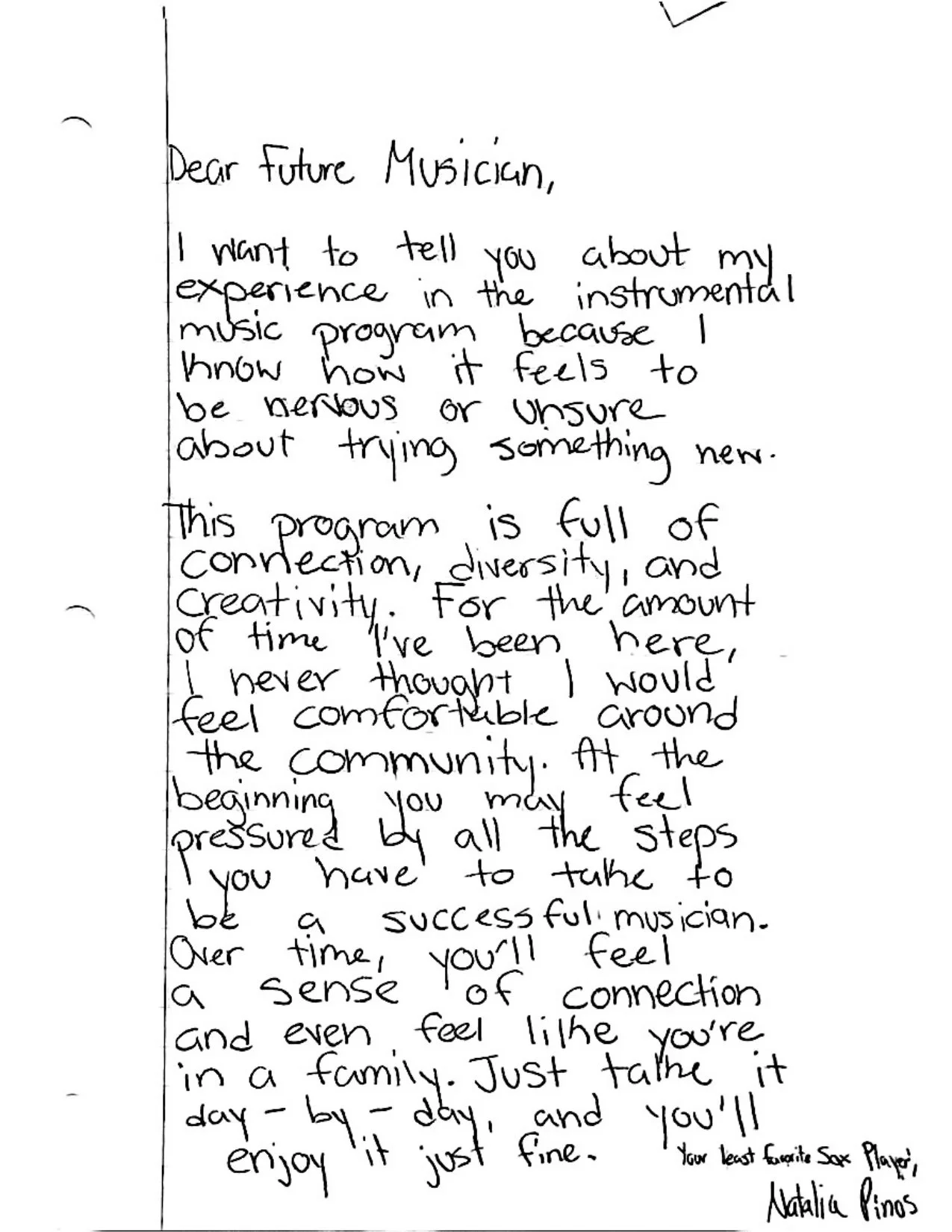
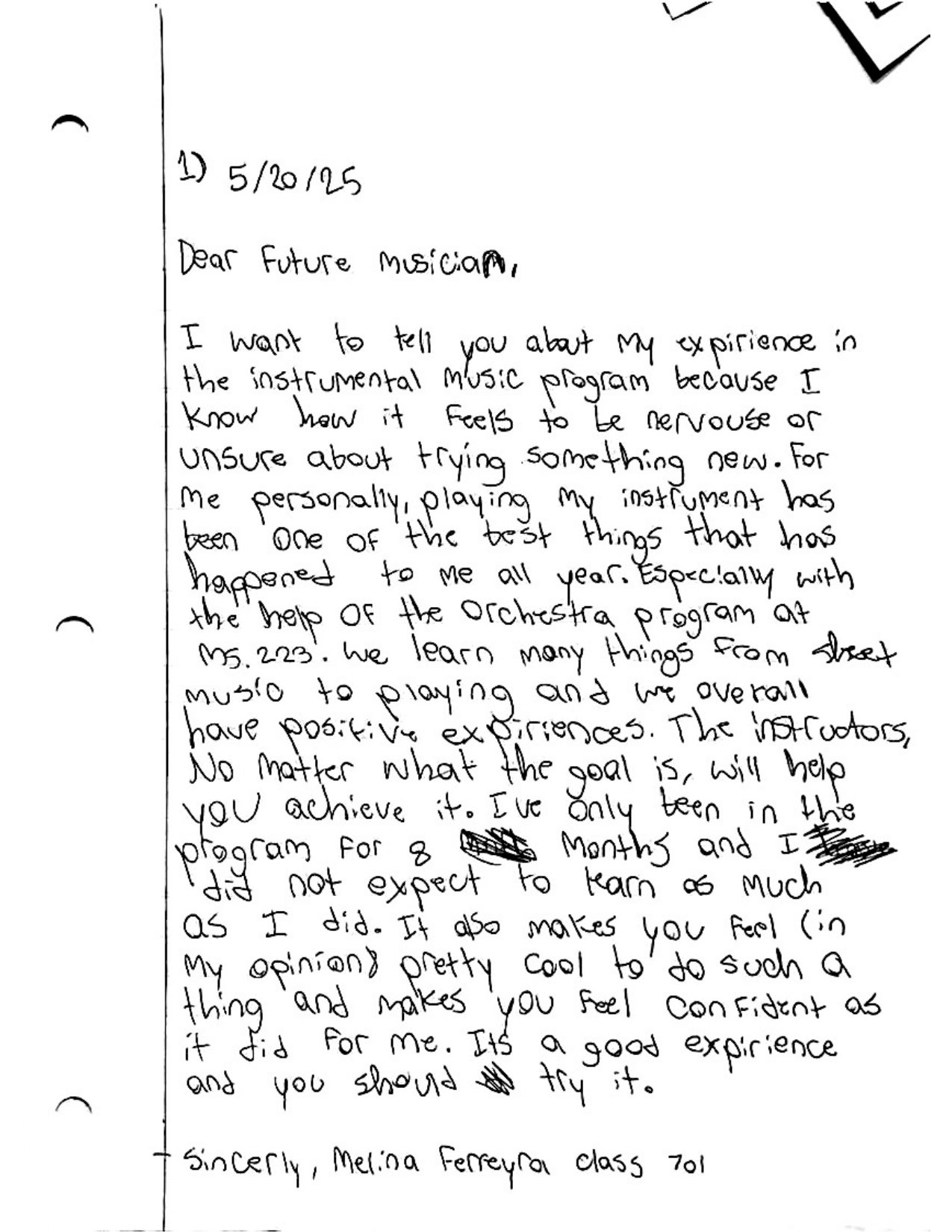
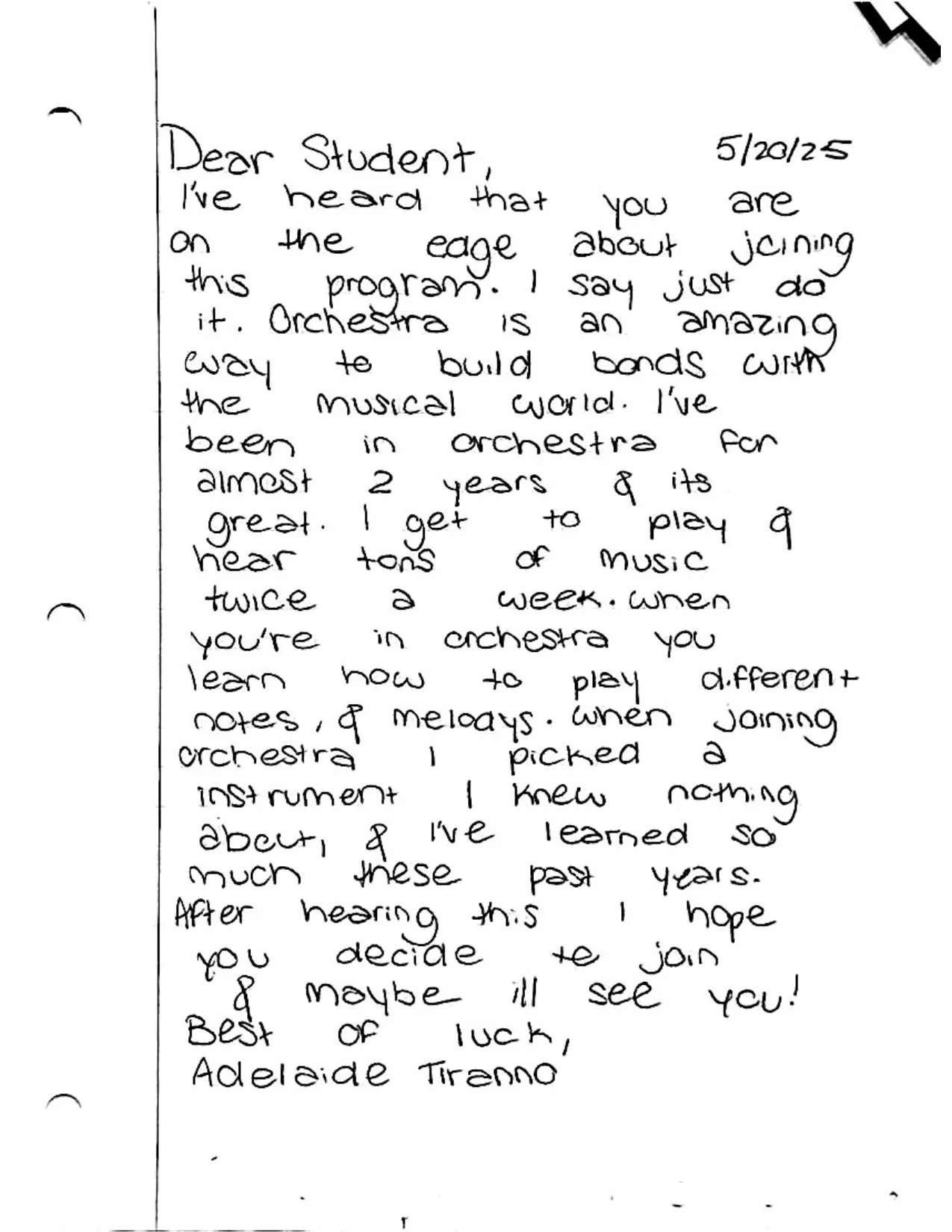
Dear Future Musicians…
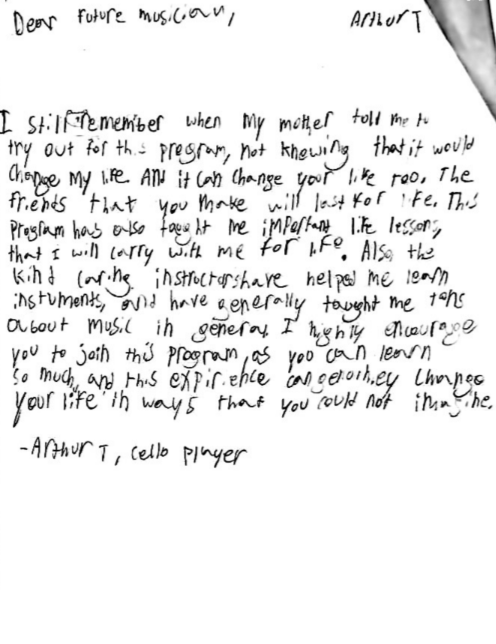
Dear Future Musician,
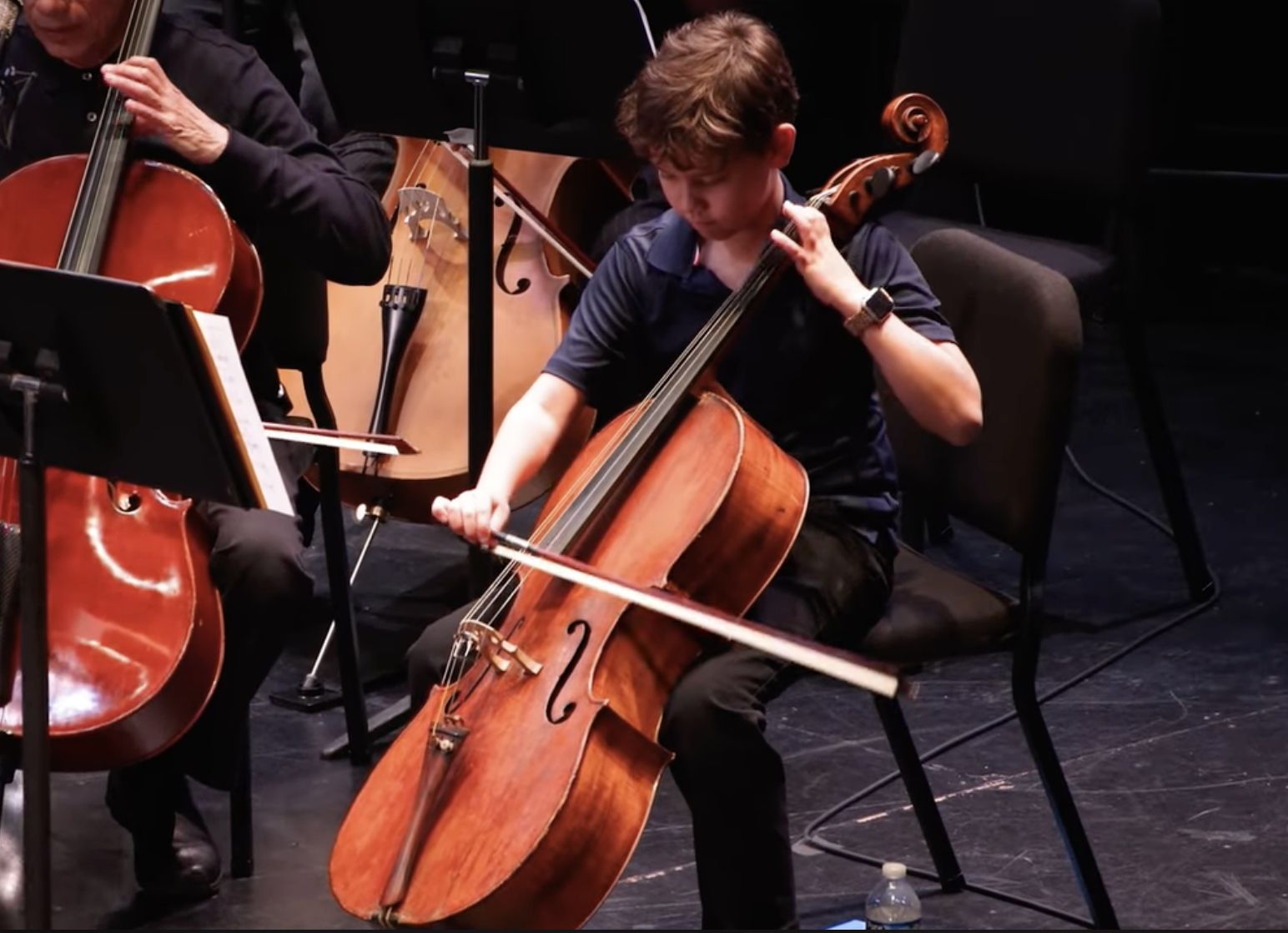
I still remember when my mother told me to try out for this program, not knowing that it would change my life. And it can change your life too. The friends that you make will last for life.
Also, the kind, caring instructors have helped me learn instruments and have generally taught me tons about music. I highly encourage you to join this program, as you can learn so much, and this experience can change your life in ways that you could not imagine.
-Arthur T, cello player
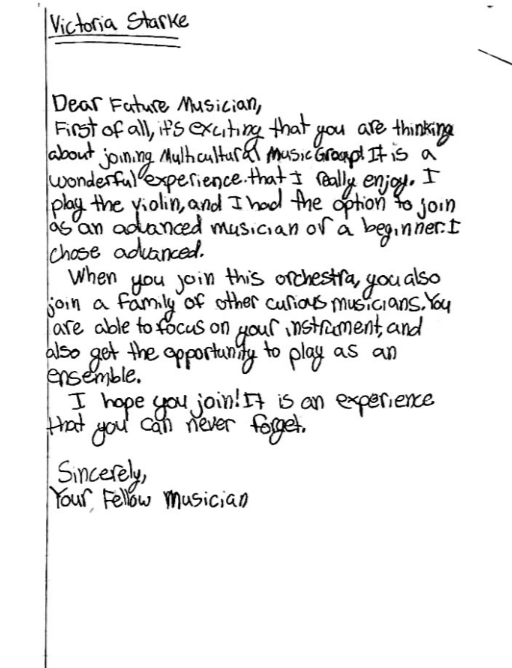
Dear Future Musician,
First of all, it's exciting that you are thinking about joining Multicultural Music Group! It is a wonderful experience that I really enjoy.
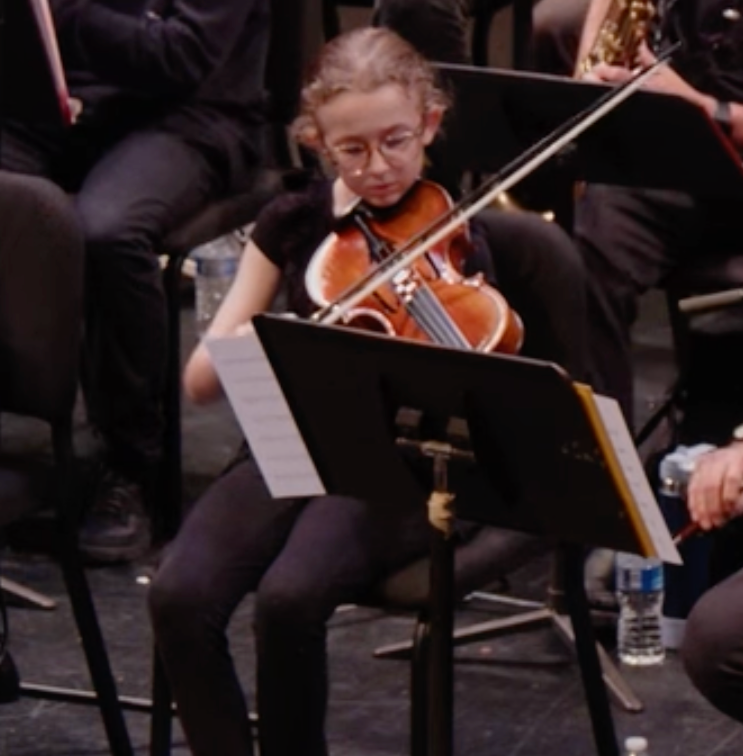
When you join this orchestra, you also join a family of other curious musicians. You are able to focus on your instrument and also get the opportunity to play as an ensemble.
I hope you join! It is an experience that you can never forget.
Sincerely,
Your Fellow Musician
-Victoria S.
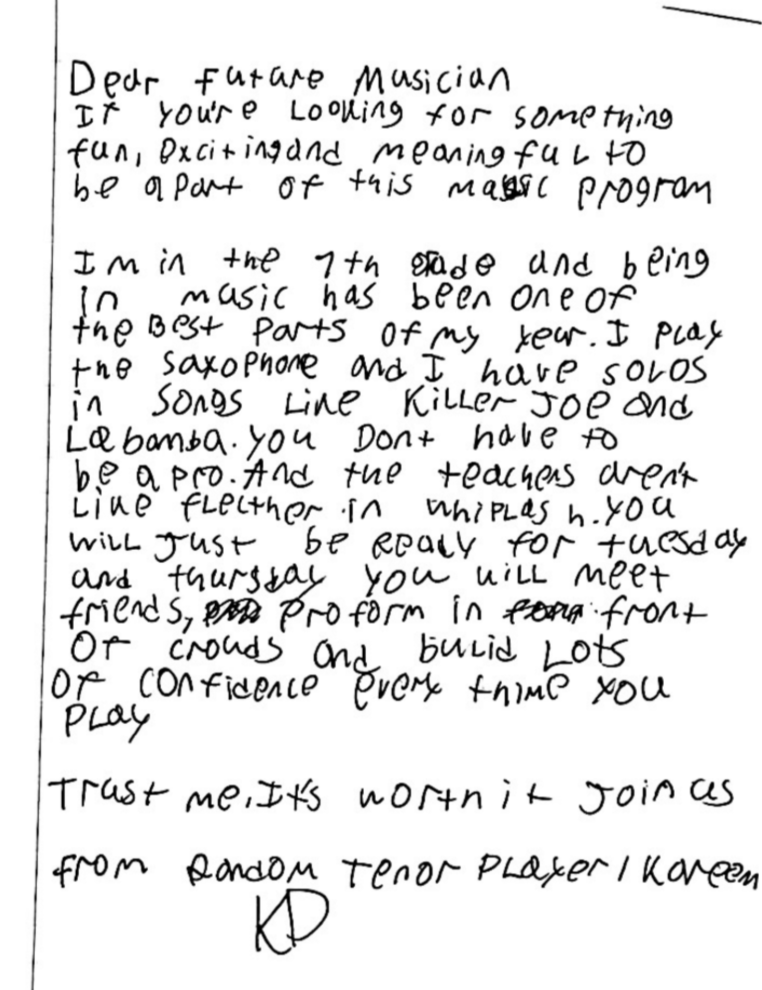
Dear Future Musician,
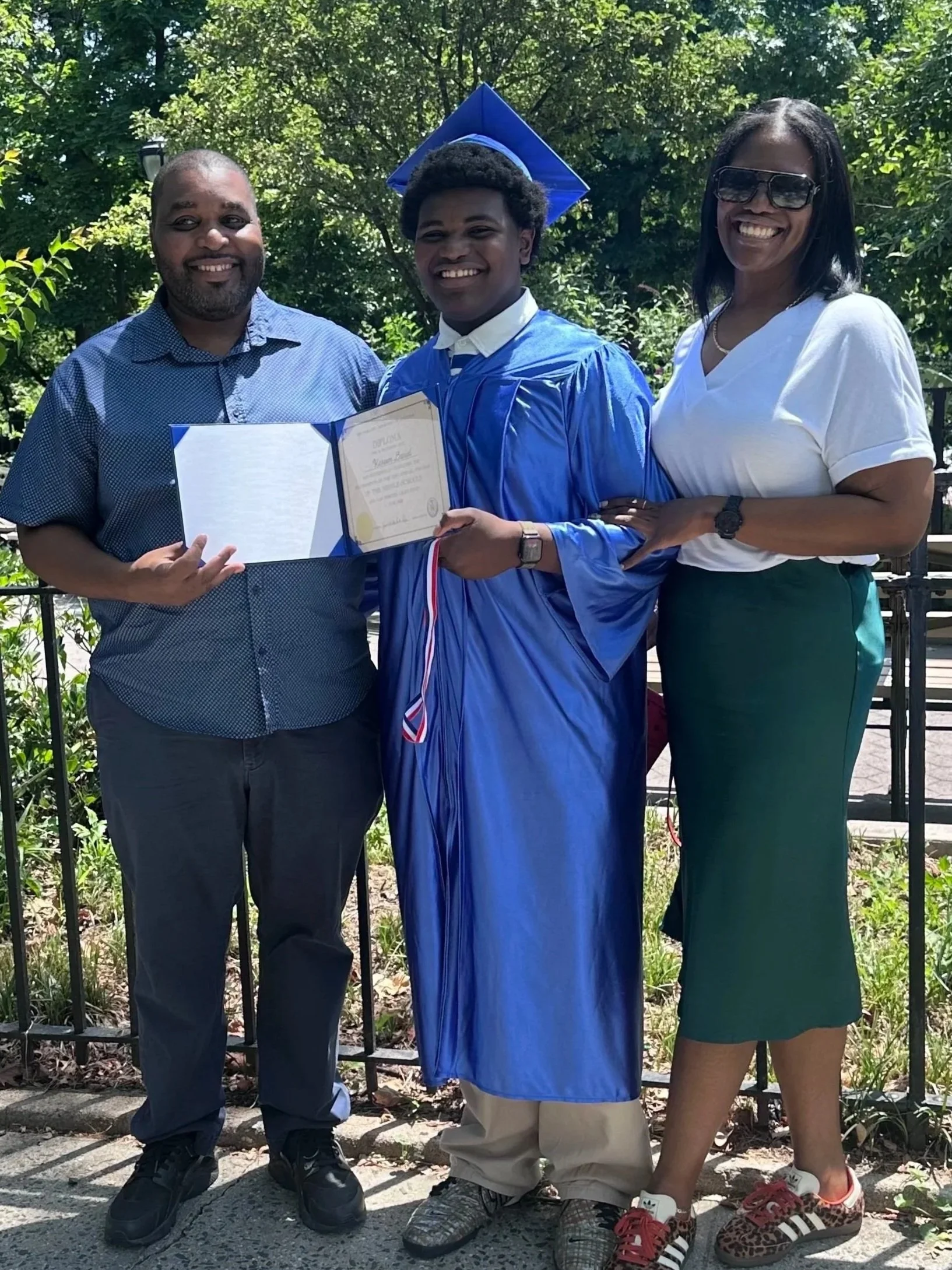
If you're looking for something fun, exciting, and meaningful to be a part of this music program. I'm in the 7th grade, and being in music has been one of the best parts of my year. I play the saxophone, and I have solos in Songs Like Killer Joe and La Bamba. You don't have to be a pro. And the teachers aren't like Fletcher in Whiplash. You will just be ready for Tuesday and Thursday; you will meet friends, perform in front of crowds, and build lots. Of course, every time you play. Trust me, it's worth it. Join us.
from Kareem
Our Symphonic Youth Students 2026-2027